


Thank you for Subscribing to Semiconductor Review Weekly Brief
× 
Semi Conductor Review Weekly Brief
Be first to read the latest tech news, Industry Leader's Insights, and CIO interviews of medium and large enterprises exclusively from Semi Conductor Review
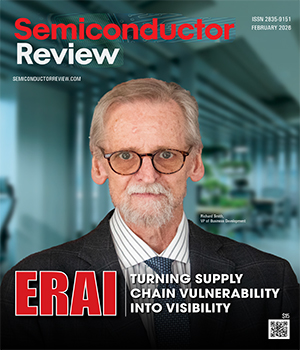
ERAI has been recognized by Semiconductor Review Magazine as the exclusive recipient of “Anti-Counterfeit Solutions of the Year 2026,” based on our proprietary methodology, reflecting its position in the industry, and is also named among “Top Testing and Quality Assurance Companies,” reflecting its broader leadership. This profile has been developed by the Semiconductor Review research and editorial team based on insights from an interview with Richard Smith, VP of Business Development.


 Richard Smith, VP of Business Development
The landscape changed in 2000 with the first confirmed report of a counterfeit integrated circuit. What initially appeared to be an isolated incident exposed a much larger shift. Electronics manufacturing was expanding across continents, supply chains were growing longer and every additional handoff created a new point of vulnerability. Counterfeiters became more sophisticated, opportunistic suppliers filled gaps created by global shortages, and online transactions opened the door to new forms of wire fraud. Risks that had once appeared occasionally became systemic, threatening reliability, performance and customer confidence across entire industries.
“Experience alone wasn’t sufficient to navigate the supply chain. What companies needed was verified data: the ability to see known high-risk parts, identify problematic suppliers and make informed decisions before material ever reached the production floor,” says Richard Smith, VP of business development.
As the nature of the threat evolved, ERAI evolved with it, becoming a global intelligence platform relied upon by organizations across aerospace, defense, medical, automotive, nuclear and industrial sectors.
Building an Information Network Built for Rapid Risk Detection
Central to ERAI’s capabilities is a system of interconnected databases that provide real-time visibility into supplier behavior, part history and high-risk activity. The company database contains detailed information on more than 36,924 organizations worldwide. Rather than labeling firms as good or bad, ERAI documents verifiable history like past incidents, performance patterns and business associations. This foundation enables manufacturers and distributors to make informed decisions about who they engage with, especially in an environment where a seemingly trusted regional supplier might ultimately source product from a lesser-known reseller several layers removed.
The high-risk and counterfeit part database represents the core of ERAI’s intelligence infrastructure. Fueled by real-time reports from a global network operating in 44 countries, the database captures real-world incidents submitted by distributors, brokers, manufacturers, test laboratories and government agencies. Each vetted report contains detailed part information, descriptions of nonconformance, supporting photographic evidence and, if available, third-party test results. In 2014 ERAI expanded its part reporting service to include a Nonconformance Photo Library for Members to search and retrieve images illustrating specific nonconformance types. Manufacturers use this database to scrub their bill of materials, identify vulnerable components, train incoming inspectors and resolve sourcing disputes.
One example illustrates how this intelligence works in practice. During the worldwide shortage of multilayer ceramic chip capacitors in 2019, a major automotive manufacturer purchased parts through the open market that later proved to be counterfeit. These components reached production and caused operational issues. ERAI helped the client document the incident, communicate with the supplier and recover part of the financial loss. Multiple firms had already reported the supplier, and the case was added to ERAI’s database. The manufacturer later became an ERAI member and now uses its tools to prevent similar issues.
-
Experience alone wasn’t sufficient to navigate the supply chain. What companies needed was verified data: the ability to see known high-risk parts, identify problematic suppliers and make informed decisions before material ever reached the production floor.
One example illustrates how this intelligence works in practice. During the worldwide shortage of multilayer ceramic chip capacitors in 2019, a major automotive manufacturer purchased parts through the open market that later proved to be counterfeit. These components reached production and caused operational issues. ERAI helped the client document the incident, communicate with the supplier and recover part of the financial loss. Multiple firms had already reported the supplier, and the case was added to ERAI’s database. The manufacturer later became an ERAI member and now uses its tools to prevent similar issues.
Complementing this intelligence is the company’s controlled parts sourcing tool, which provides an accountable environment for obtaining components. Unlike many open platforms where anonymous sellers can post parts with little documentation or quality control, only ERAI members in good standing may list inventory. This creates a level of oversight that public marketplaces cannot provide and offers a safer alternative for organizations under pressure to locate parts during shortages or unexpected spikes in demand.
A Reporting Model That Strengthens the Entire Supply Chain
ERAI’s reporting model is built on transparency and collective protection. Membership is not required to report a counterfeit part or suspicious supplier. Any organization that encounters noncoforming material can submit a report, and ERAI verifies the details before adding them to the global database to ensure accuracy. The shared reporting ecosystem creates a collective early-warning system for the global supply chain.
When a counterfeit case points to a specific supplier, ERAI contacts them to gather information. In cases where the suppliers themselves have been victimized, ERAI helps identify the root source and directs the supplier toward stronger processes and industry standards. This approach ensures that accountability is placed accurately and that honest suppliers have an opportunity to improve rather than face industry isolation.
Training That Strengthens Supply Chain Defense
Recognizing that intelligence is only effective when organizations know how to act on it, ERAI established InterCEPT, an online training division designed to support counterfeit risk mitigation without disrupting operations. InterCEPT provides shorter, flexible sessions that fit naturally into existing workflows, moving away from an approach that require employees to be away from production for several days,
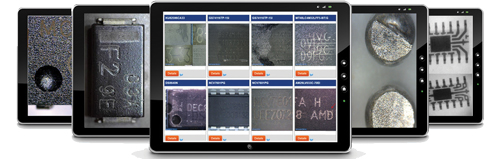 The program includes focused courses like CP 01, which guides participants through the development of a documented counterfeit mitigation plan. By the end of the course, organizations have the knowledge to create a structured document that can be used internally or shared with customers to demonstrate compliance. InterCEPT also supports production floor personnel, who often serve as the final line of defense when evaluating questionable material.
To meet the needs of different roles within the supply chain, InterCEPT offers three certification paths. Visual Inspector One and Two provide illustrated instruction for employees who handle and assess components daily, with certifications valid for five years and opportunities to renew or update skills as industry practices evolve. The Program Manager certification focuses on providing leaders with a practical understanding of counterfeit risks so they can effectively communicate processes to colleagues, management, and customers.
Expanding Capabilities and Strengthening Industry Connections
ERAI is entering a new stage of growth as it explores incorporating AI into its search functions and analytic tools. The goal is to deliver broader insights, streamline the inquiry process and further reduce the time required to evaluate supplier or part risk. The company is also increasing its presence at major trade events. In 2026, it will attend Electronica in Munich for the first time and expand participation in industry events throughout the U.S.
For Smith, these developments reinforce a foundational belief shaped by more than four decades in international electronic component distribution. Having opened facilities in Mexico, Malaysia, China and India and worked across 29 countries, he emphasizes that the industry remains fundamentally relationship-driven. Technology enhances the process, but trust, communication and shared understanding continue to define successful outcomes.
As global electronics continue to evolve, ERAI remains committed to providing verified intelligence, reliable sourcing tools and practical education. What began as an effort to encourage responsible distribution practices has grown into a global resource to protect the integrity of modern supply chains and sustain the trust on which global manufacturing depends.
Anti-Counterfeit Integrity in the Semiconductor Supply Chain
Counterfeit electronic components remain one of the most persistent risks in the semiconductor supply chain. Executive buyers responsible for anti-counterfeit solutions operate in an environment defined by long component lifecycles, frequent shortages and complex global sourcing. A single compromised part can trigger downstream failures, regulatory exposure and reputational damage that far outweigh procurement savings. The problem is no longer limited to fringe suppliers or opportunistic fraud during shortages. It has become embedded in open-market sourcing, excess inventory channels and secondary distribution networks that legitimate organizations must sometimes rely on to maintain continuity.
Effective evaluation begins with how well a solution converts fragmented market signals into usable intelligence. Semiconductor companies require more than static blacklists or anecdotal alerts. They need a real-time view of parts, suppliers and incidents that reflects actual transactions and verified outcomes. The credibility of that intelligence depends on the breadth of contributors, the rigor of validation and the ability to trace reported issues back to specific components and counterparties. Solutions that rely on narrow data sources or voluntary self-reporting struggle to keep pace with the velocity of counterfeit activity.
Another defining aspect is practical applicability across procurement and quality workflows. Anti-counterfeit intelligence has limited value if it sits outside day-to-day decision-making. Buyers benefit from tools that allow bills of materials to be screened, sourcing options to be compared and inspection teams to recognize known risk indicators before parts enter production. This requires structured data, searchable formats and supporting evidence that can be shared internally to resolve disputes or justify sourcing decisions. Visual documentation and independent verification play an important role in aligning procurement, quality and management teams around risk mitigation actions.
Sustainable risk reduction also depends on organizational capability, not just information access. Semiconductor manufacturers and distributors face staff turnover, distributed operations and varying levels of inspection maturity. Training that builds a consistent understanding of counterfeit indicators, mitigation planning and escalation processes strengthens the last lines of defense when market pressures force exceptions to preferred sourcing. Scalable education models are particularly relevant in this sector, where production interruptions carry a high cost and inspection expertise cannot be concentrated in a single location.
In this scenario, enterprises favor providers that combine long-term industry intelligence, controlled sourcing ecosystems and practical enablement. ERAI aligns closely with these priorities. It maintains a global repository of reported counterfeit and nonconforming components, supported by verified incident data, imagery, and test documentation, which buyers can apply directly to procurement and quality decisions. Its controlled part sourcing environment limits listings to vetted members, reducing exposure to unknown sellers common on open marketplaces. Complementing its data assets, ERAI delivers structured training and certification programs that allow organizations to formalize mitigation plans and elevate inspection competence without disrupting production schedules. Together, these capabilities position ERAI as a dependable partner for semiconductor firms seeking a disciplined, evidence-based approach to anti-counterfeit risk management.
...Read more
| Share this Article:Tweet
|
Company
ERAI
Management
Richard Smith, VP of Business Development
Description
ERAI is a global information services organization that monitors, investigates and reports risks in the electronics supply chain. Through comprehensive databases, real-time counterfeit incident reporting and specialized training programs, ERAI helps manufacturers identify unreliable suppliers, prevent counterfeit components and strengthen their mitigation processes across industries, including defense, aerospace, medical and automotive.
This content is copyright protected
However, if you would like to share the information in this article, you may use the link below: